
We have grown used to thinking of sugar as a harmless pleasure. A spoonful in tea, a candy after lunch, a sweet yogurt for breakfast — all of it feels like a normal part of life. But what if that "normal" was artificially inflated? What if the human body was never designed for the amount of added sugar we now consume? Let us look at why the World Health Organization keeps revising its recommendations downward, who resists these changes and why, and what sugar has in common with alcohol — a substance the WHO now considers dangerous at any dose.

The WHO Keeps Lowering the Bar — and the Trend Is Clear
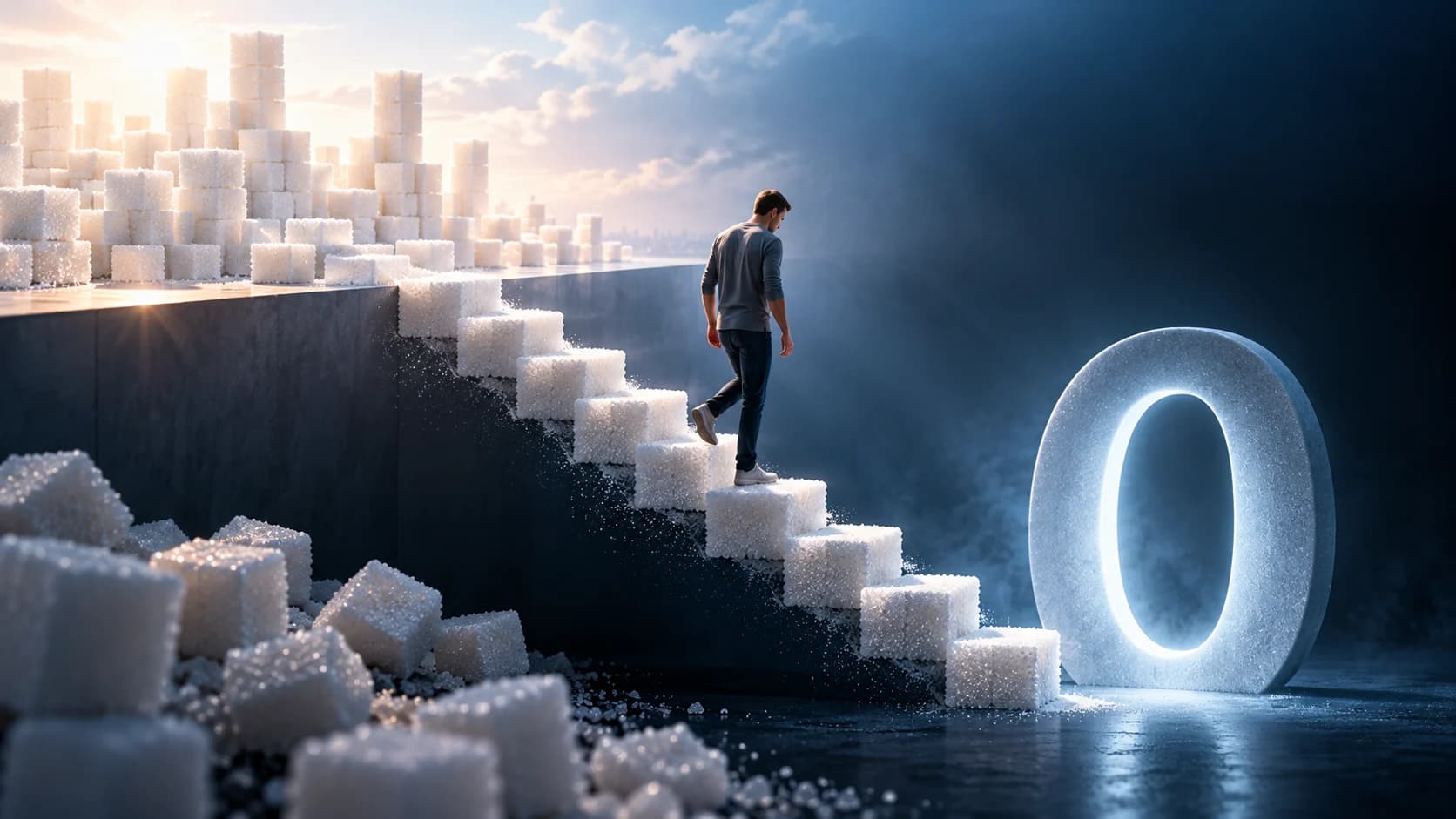
Back in 2003, the WHO recommended limiting added sugar to less than 10% of daily calories. For an average adult, that is roughly 50 grams, or 12 teaspoons a day. It seemed like a reasonable benchmark. But in 2015, the organization released an updated guideline that not only confirmed the previous threshold but added a fundamentally new recommendation: further reducing intake to less than 5% of daily calories — about 25 grams, or 6 teaspoons — would provide additional health benefits.
Francesco Branca, then Director of the WHO Department of Nutrition for Health and Development, stated plainly: "We have strong evidence that keeping free sugars intake below 10% of total energy intake reduces the risk of overweight, obesity and tooth decay." Notice the wording: 5% is not a "hard requirement" but a "goal worth pursuing." In official WHO documents, it is labeled a "conditional recommendation" — meaning the organization recognizes that the evidence for this level is already sufficient to recommend it, but not yet strong enough to make it mandatory.
Still, the direction is obvious: over two decades, the WHO has moved from 10% to a de facto target of 5% and below. And this is not the final stop — the logic of reduction does not suggest stopping halfway.
Sugar Accelerates Aging — and It Is Scientifically Proven

If sugar's harm to metabolism and teeth has been known for a long time, its effect on aging remained on the periphery of public attention. Today, it is one of the most actively studied topics in gerontology and nutrition science.
Glycation: sugar literally "glues" proteins together. When blood glucose rises, sugar molecules begin to bind non-enzymatically to proteins — a process called glycation. The resulting advanced glycation end-products, or AGEs, accumulate in tissues and trigger a cascade of destructive reactions. In the skin, AGEs attack collagen and elastin — the proteins responsible for firmness and elasticity. Collagen molecules become cross-linked, losing their ability to repair themselves. The result is wrinkles, sagging, and loss of tone. Moreover, collagen glycation is not limited to the skin: AGEs accumulate in blood vessel walls, the lens of the eye, kidney tissue, and even the brain, contributing to age-related diseases from atherosclerosis to neurodegeneration.
Epigenetic clocks: every spoonful of sugar "ages" your cells. In 2024, researchers at the University of California, San Francisco, published breakthrough findings in JAMA Network Open. They studied how added sugar intake affects "epigenetic clocks" — biochemical markers that reflect the biological age of cells. It turned out that even among people who otherwise followed a healthy diet, every gram of added sugar was associated with an increase in epigenetic age. In other words, sugar accelerates aging independently of overall diet quality. The study measured: each additional serving of sugar "turns back" the biological clock toward aging. Participants consumed an average of 61.5 grams of added sugar per day — twice the recommended limit.
Telomeres: sugar shortens the "protective caps" of chromosomes. Telomeres are the end sections of chromosomes that protect DNA from damage. With each cell division, they shorten, and their length is considered one of the key markers of cellular aging. A study published in the American Journal of Public Health showed that regular consumption of sugar-sweetened beverages is associated with shorter leukocyte telomeres — meaning sugar accelerates cellular aging at the DNA level. Another study confirmed that AGEs formed by high sugar intake directly accelerate telomere attrition and increase levels of pro-inflammatory mediators.
What does this mean in practice? Sugar triggers aging through several channels at once: through glycation it destroys structural proteins, through oxidative stress it damages cells, through telomere shortening it accelerates cellular aging, and through chronic inflammation it creates a background for age-related diseases. A 2026 review directly states that excessive sugar consumption "significantly contributes to accelerated aging through various biochemical pathways," and clinical data confirm the link between high-sugar diets and markers of aging, including reduced skin elasticity and increased incidence of age-related diseases.
Alcohol: A Lesson Worth Learning

The history of alcohol offers a valuable lesson. For decades, the belief persisted that moderate wine consumption was good for the heart. The WHO long set "safe" thresholds: no more than two standard drinks per day. But in 2023, the organization made a statement that overturned conventional wisdom: "No level of alcohol consumption is safe for our health." Risk begins with the first drop. Alcohol is classified as a Group 1 carcinogen — it causes at least seven types of cancer, including bowel and breast cancer.
How did humanity come to mass alcohol consumption? In ancient times, water was often contaminated with bacteria and parasites. People did not know about boiling, but they empirically discovered that wine mixed with water was safer to drink — alcohol killed most harmful microbes. Wine in those days was not a beverage for pleasure but a forced measure of survival. It was consumed diluted, in small quantities, and was more medicine than entertainment.
But once the problem of clean water was solved — through centralized water supply, filtration, and an understanding of hygiene — the rational need for alcohol disappeared. Only the habit remained, and it grew into uncontrolled consumption. Today, the WHO does not simply say "drink less" — it says: do not start, and if you drink, cut down.
The analogy with sugar suggests itself. In ancient times, sugar was a rare and expensive product available only to the elite. The human body is evolutionarily unadapted to high concentrations of sugar — our sweet receptors formed in an environment poor in sugars. Today, added sugar is everywhere: in sauces, bread, ready-made breakfasts, yogurts, "healthy" bars. What was once a rare delicacy has become a daily norm. And, as with alcohol, we face the question: if there is no safe dose of alcohol, why do we continue to believe in a safe dose of sugar?
Addiction Stronger Than It Seems

Sugar is not just "empty calories." It is a substance that affects the brain in ways similar to narcotics. A 2007 study published in PLOS ONE showed that when rats were offered a choice between saccharin-sweetened water and intravenous cocaine, 94% of the animals preferred the sweet taste. Moreover, the preference persisted even when the cocaine dose was increased and even in rats already dependent on cocaine.
A review published in the British Journal of Sports Medicine in 2017 confirmed that in animal studies, sugar produced more symptoms required to classify a substance as "addictive" than many classic drugs — including compulsive overeating, craving, and opioid effects. The authors concluded that there is "significant overlap" between added sugar and drugs in terms of neurobiological mechanisms.
Of course, it is important to note: human sugar addiction is not identical to heroin addiction. But the reward mechanism — dopamine spike, habit formation, withdrawal symptoms — is largely similar. Sugar stimulates the same brain structures as drugs, just with less intensity. However, its availability and legality make it perhaps more insidious: giving up a substance sold in every store and added to most products is immeasurably harder than avoiding illegal drugs.
Who Benefits from Sugar?

Here we come to an uncomfortable topic. If sugar is so harmful, why is it produced and sold so aggressively? The answer is simple: business.
Sugar producers, confectionery factories, and beverage manufacturers are multibillion-dollar industries. And they understand perfectly well that a mass rejection of added sugar would mean catastrophe for them. Irina Eldarkhanova, vice-president of the Guild of Bakers and Confectioners, stated directly: if Russians stop eating sugary sweets and switch to functional sugar-free sweets, it "could lead to bankruptcy for confectioners." Already today, major chocolate manufacturers are cutting staff and optimizing production.
But this is only the tip of the iceberg. Paid medicine and dentistry are another sector that has no interest in healthy people. If people stop consuming added sugar, the prevalence of caries, type 2 diabetes, obesity, and metabolic syndrome will drop sharply. Dentists will lose their flow of patients with cavities. Therapists and endocrinologists will lose their flow of diabetics. Pharmaceutical companies will lose the market for drugs treating these conditions.
Modeling studies show that a 20% reduction in added sugar consumption prevents more than 0.7 million disability-adjusted life years annually and yields economic benefits of about $10.3 billion. However, these benefits are distributed across society as a whole, while losses are concentrated in specific industries — those with the resources to lobby for their interests.

And lobbying does work. Researchers note that "despite the evidence and technical guidance from the WHO on sugars, the public health and political response of the organization was hampered by political bargaining and corporate influence." Sugar producers have funded research for decades that shifts focus away from sugar to other factors — such as lack of physical activity. Major beverage manufacturers have lobbied against taxes on sugary drinks through industry groups.
This is not a conspiracy theory — it is documented reality. Industry does what any industry must do: protect its profits. The only question is whether we are ready to admit that this profit is built on deteriorating public health.
The Economic Paradox: Short-Term Gain vs. Long-Term Loss

At first glance, the sugar business seems good for the economy: jobs, taxes, exports. But if you look at the total costs, the picture changes. Type 2 diabetes, obesity, and related complications cost healthcare systems sums comparable to the revenues of the sugar industry. Lost productivity due to diet-related diseases reduces GDP. Dental expenses place a heavy burden on families and the state.
In other words, society pays twice: first by buying products with added sugar, then by paying for the treatment of the consequences. The sugar industry privatizes profits but socializes losses.
0 Grams Is Not Utopia — It Is the Logical Evolution of Norms

So where are we heading? The WHO has already said there is no safe level of alcohol. For sugar, it still formulates recommendations more cautiously — 5% and below as a "goal." But the trajectory is clear: from 10% to 5%, from 5% to zero.
This does not mean giving up fruits and dairy products — it refers exclusively to added sugar, the sugar that manufacturers put into foods and drinks. Natural sugars in whole fruits and vegetables do not cause the same metabolic problems because they come with fiber, vitamins, and minerals, in natural concentrations.
0 grams of added sugar is not asceticism. It is a return to how the human body was originally designed. It is an acknowledgment that a substance we considered a harmless pleasure is actually an addiction imposed by industry for profit — and that it accelerates aging at the cellular level, literally taking years away from us.
The sooner we realize this — as a society, as consumers, as parents — the sooner we will arrive at a future where type 2 diabetes is no longer an epidemic, where cavities are not the norm, where children are not hooked on the sugar needle from an early age, and where our cells age at a natural rate, not pushed along by every spoonful of sugar. Giving up added sugar is not deprivation. It is liberation. And that future starts at zero.
References
- WHO, Diet, Nutrition and the Prevention of Chronic Diseases (2003): https://www.who.int/publications/i/item/924120916X
- WHO, Guideline: Sugars intake for adults and children (2015): https://www.who.int/publications/i/item/9789241549028
- WHO, No level of alcohol consumption is safe for our health (2023): https://www.who.int/europe/news/item/04-01-2023-no-level-of-alcohol-consumption-is-safe-for-our-health
- JAMA Network Open, Association of Added Sugar Intake With Epigenetic Age Acceleration (2024): https://jamanetwork.com/journals/jamanetworkopen/fullarticle/2821368
- American Journal of Public Health, Sugar-Sweetened Beverages and Telomere Length (2014): https://ajph.aphapublications.org/doi/10.2105/AJPH.2014.302151
- PLOS ONE, Intense Sweetness Surpasses Cocaine Reward (2007): https://journals.plos.org/plosone/article?id=10.1371/journal.pone.0000698
- British Journal of Sports Medicine, Sugar addiction: is it real? A narrative review (2017): https://bjsm.bmj.com/content/51/22/1634